

Comprehensive solutions for high-risk environments with expert consultancy, specialist training, and safety equipment


REAX principles

Experience Driven Training
Driven by a passion to protect and teach, our ex-service and industry specialists pass on their lessons learned to anyone working in challenging environments.

Zero bullsh**
Our clients work in unique situations, with serious consequences, so we’re proud to be straight talkers.

For need, not greed
We're not interested in a quick win or selling you something you don't need. Our commitment to customer service ensures you will get the best training, advice or equipment solution for working safely in your field.

Partners for life
Our commitment to you does not end with your training course finishing. We send renewal reminders at expiry and you can keep up to date via our online blogs and social media platforms.
All our candidates also have access to our content hub as well as telephone support for the duration of their certification.
Best in Class for...
Training
Our instructors have over 350 years of industry experience between them, and with over 60 courses available, your training is in safe hands.
Safety equipment
Having confidence in your kit is as important as the training you receive. Reax can advise you on the best solution for your situation and guarantee a competitive price. We also can ensure your kit stays fit for purpose through our PPE inspection and Servicing team. We can even hire you replacement kit while your kit is being serviced.
Rescue planning & consultation
We are committed to finding the right solution for you. This means you can rest assured that your next major project is covered by a bespoke rescue plan that has been made in consultation, not a pre packed formula.
Our Facility
Use the link below to explore our REAX facility in Virtual Reality

Don't take our word for it
Reax is committed to being the 'best in class' in everything we do. here is what some of the companies we collaborate with say about us...


James Pollard
Sapphire Utility Services


Idi Omar
Johnson Matthey


Dan Gallimore
United Utilities

Owen Davies
Mitie


Lee Smith
Taskmaster

Jonny
United Utilities
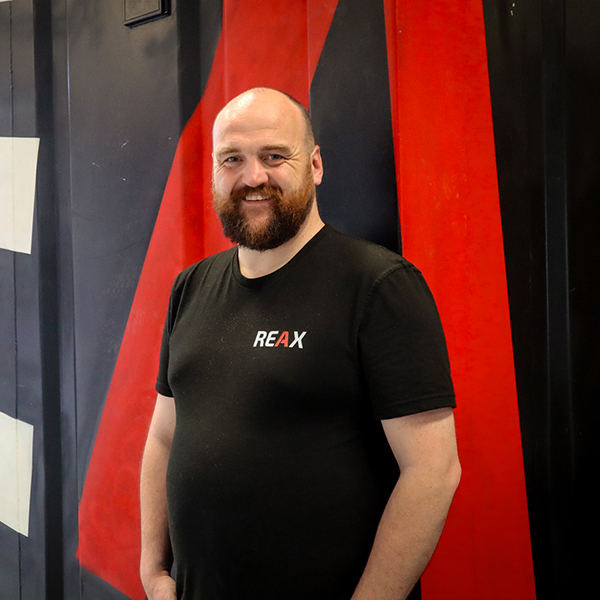
Meet the team
Learn more about us, see who you'll be working with.




Committed to excellence and service
What people say about us

10079 lives empowered
Completing one of our training courses not only empowers you to work confidently and safely, it also makes you part of the Reax community.

FAQs
We have put some answers to the most commonly asked questions regarding our training below . If you have a question we have not answered, click on contact us

REAX stands for RESCUE & ACCESS. These have been the cornerstones of the training we provide and equipment we supply. Whether working at height, in a confined space, or you are faced with an injured colleague in the workplace our goal is to empower you to use your skills in the most difficult of environments, safely.
The minimum age for First Aid training is 16. For all other courses the minimum age is 18.
It depends on the piece of equipment and how often it is used. Most equipment will require a minimum of an annual inspection while some specialist lifting and working at height equipment will require 6-monthly checks. All equipment should be check prior to use by whoever is using it.
We are open 8:30am - 4:30pm Monday - Friday. Weekend Courses are available on request.
No, All Equipment will be provided when training in our centre. We can sometimes use the same equipment that you use in your workplace
We work across the length and breadth of Great Britain. We can deliver training on site or on our state-of-the-art mobile training rig. Alternatively, we would be delighted to train you at our bespoke training centre in Blackpool Lancashire in the North West of the United Kingdom
The Health and Safety Executive (HSE) states that “Employers must protect workers from health and safety risks.” Personal Protective Equipment or PPE is any piece of equipment that will protect a person from injury or harm while performing a work-related task.
All Instructors at REAX have come through our onboarding programme. The programme takes you from skilled practitioner to someone able to breakdown the technical aspects of a task or activity and teach others to use them confidently and safely. We have developed a series of training pathways that will give you all the attributes to become an instructor. If you have passion to teach others, then we would love to hear from you.
All Reax Training courses certify you for three years. But don’t worry we will send you an automated reminder when your certificate is due for renewal
Through our network of suppliers we can access the best quality equipment. While we constantly hold a great deal of stock some items will be shipped on order direct from the manufacturer. In short, if it is a piece of specialist equipment for working at height, in a confined space, rescue or first aid, our Equipment Team can find the right piece of kit for you.
Contact us
Please complete the form below and a member of the team will get back to you within 2 business hours.


